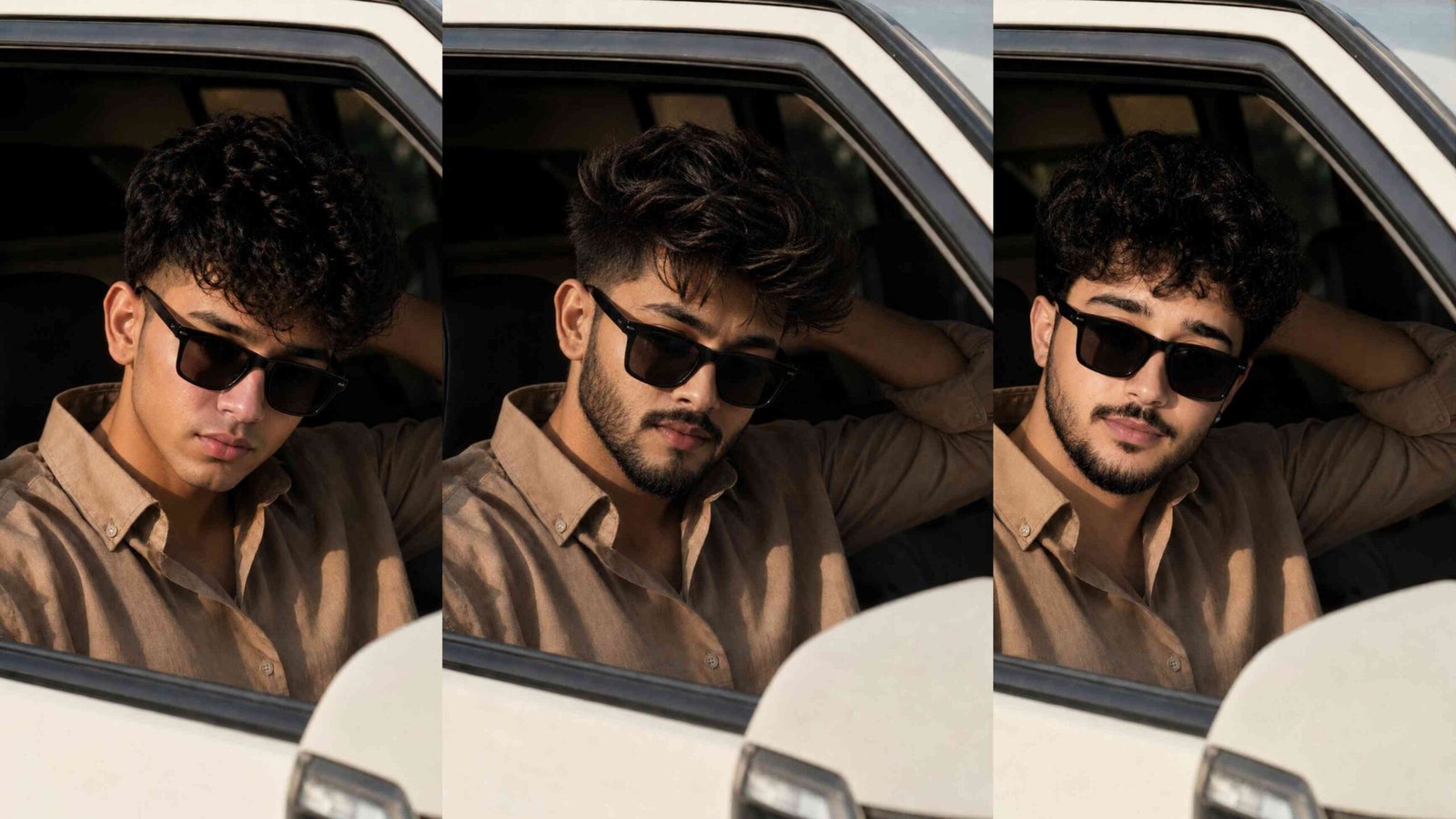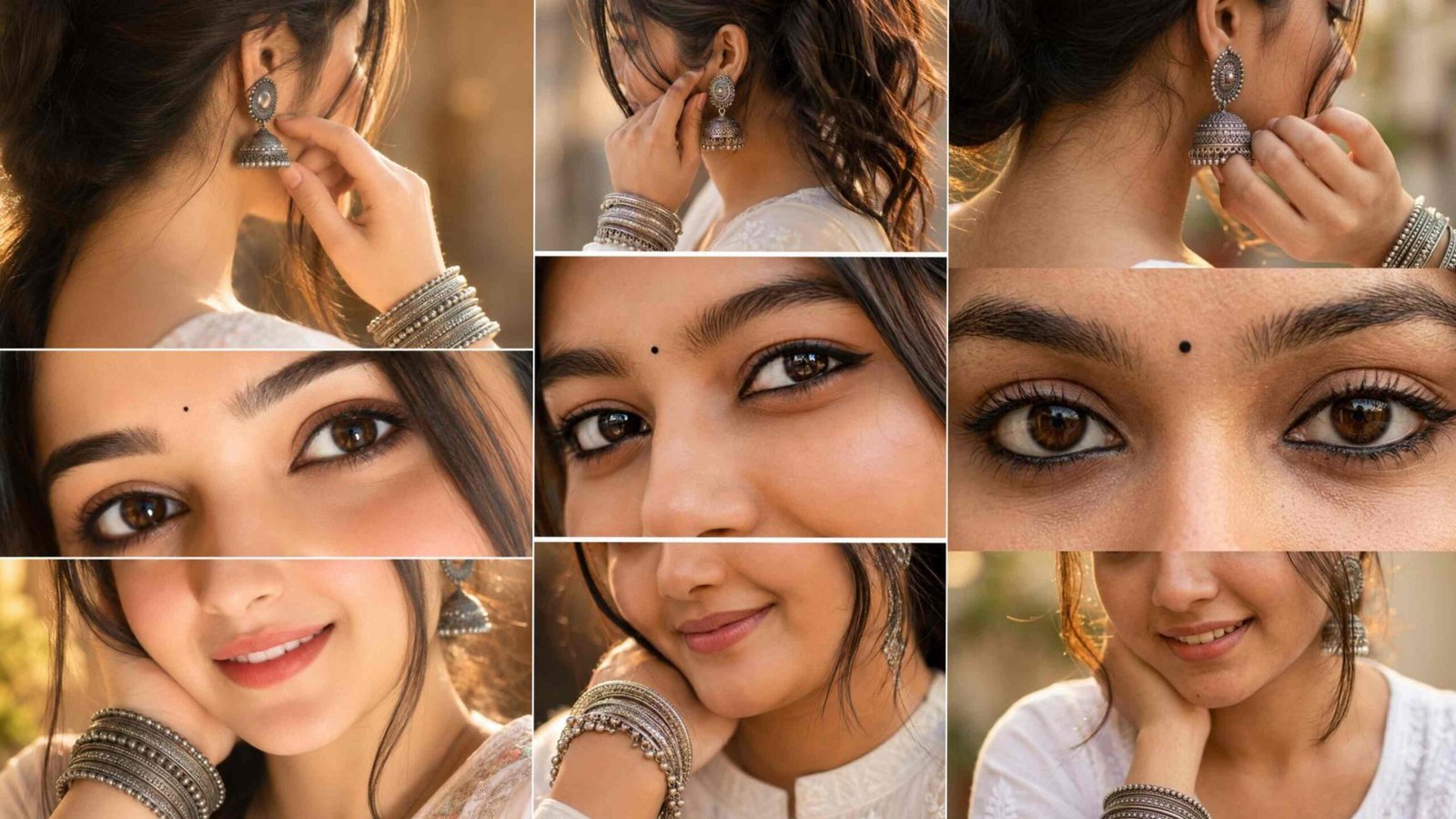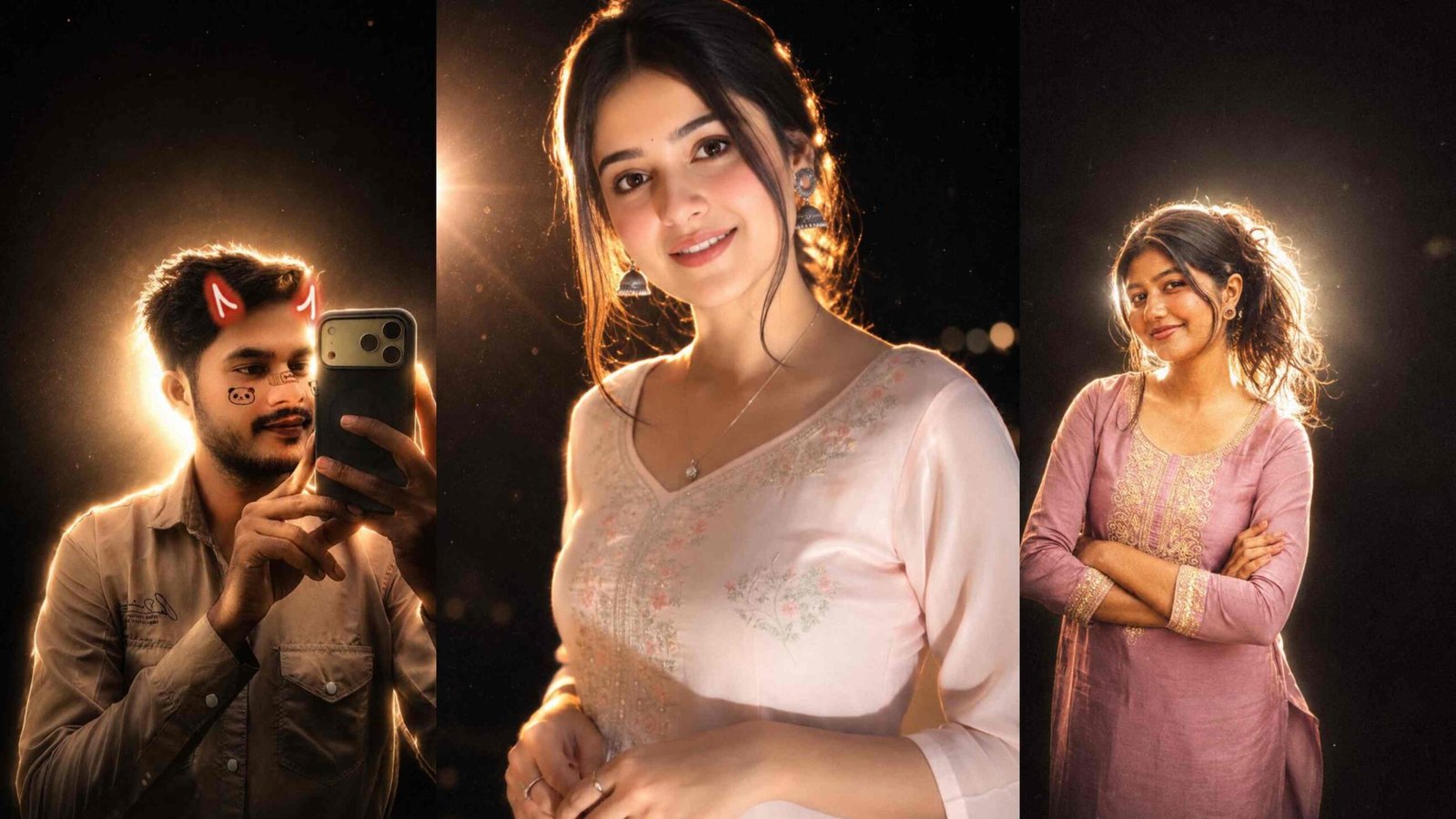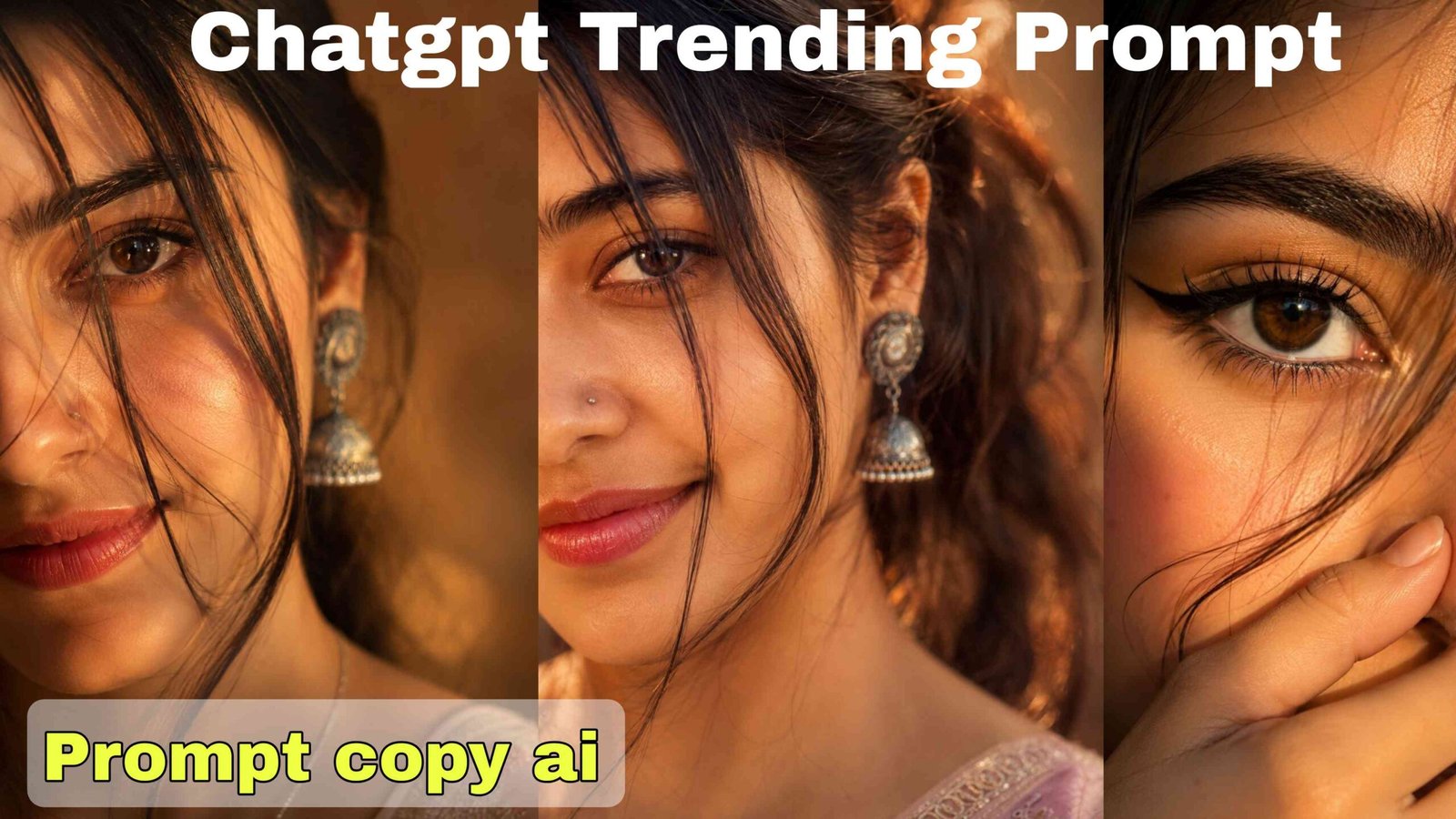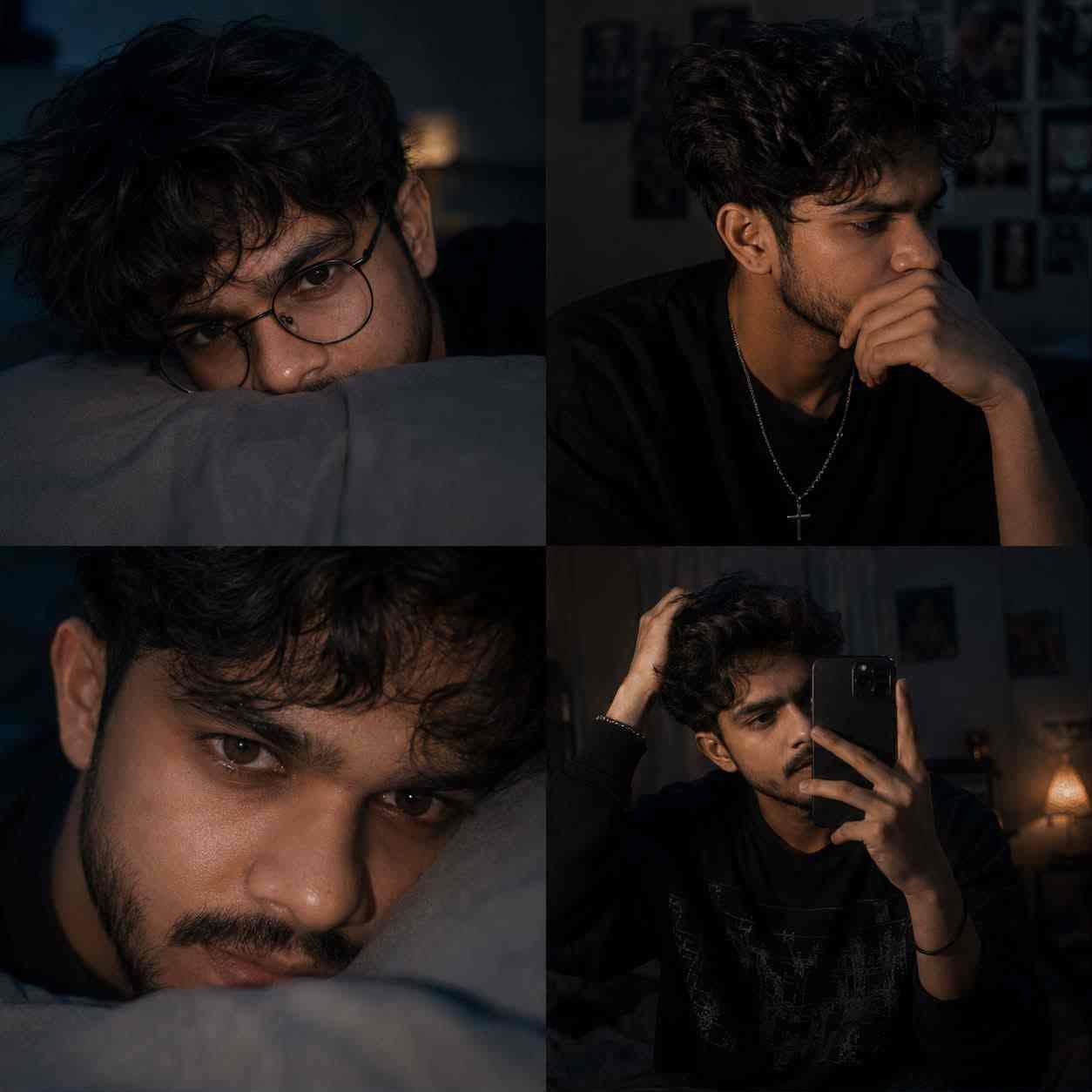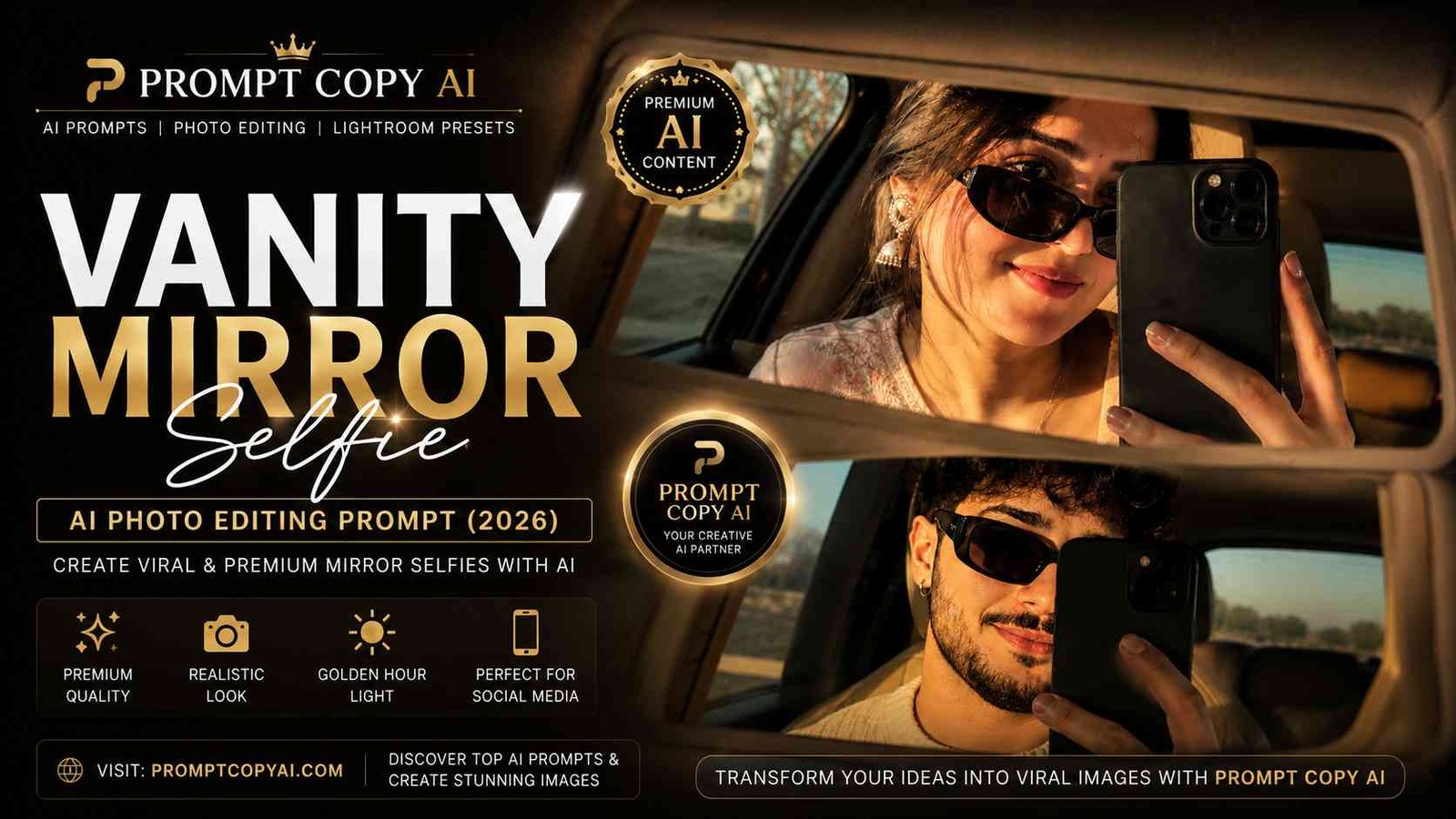
There’s a specific moment when you’re driving in your luxury car during golden hour, and the sunlight hits your face just perfectly as you glance at the car’s visor mirror. That’s the vibe everyone’s trying to capture right now, and thanks to AI photo editing, you can create this exact aesthetic without needing perfect lighting conditions or expensive equipment.
The vanity mirror selfie AI photo editing prompt trend has exploded across Instagram, TikTok, and Pinterest throughout 2026. It’s not just any mirror selfie—it’s specifically that glamorous moment caught in a car’s vanity mirror with golden hour lighting, designer sunglasses, and luxury car interiors. The best part? With the right prompt and tools like Prompt Copy AI, you can generate these stunning images in seconds.
This guide walks you through everything you need to know about creating professional-quality vanity mirror selfies using AI. Whether you’re a content creator looking to boost your engagement or someone who just loves gorgeous photos, this article has everything you need.
What is a Vanity Mirror Selfie AI Photo Editing Prompt?
A vanity mirror selfie AI photo editing prompt is a detailed text instruction written specifically for AI image generators like ChatGPT, Gemini, Midjourney, or Leonardo AI. This prompt tells the AI exactly what image you want to create—down to the smallest details.
Think of it as giving an invisible photographer and stylist extremely specific instructions. You’re describing not just your appearance, but the environment, lighting, mood, and technical quality you want. The AI then interprets this information and generates a photorealistic image that matches your description.
What makes the vanity mirror selfie specifically popular is the combination of elements: the mirror itself, the luxury car interior, golden hour lighting, and that effortlessly glamorous aesthetic. Prompt Copy AI specializes in creating these detailed prompts that deliver consistently stunning results.
Why It’s Different from Regular Selfies
Regular selfies are just photos of your face. Vanity mirror selfies are an entire mood. They include:
- The mirror frame and reflection angle
- Car interior details and luxury elements
- Specific lighting conditions (golden hour)
- Fashion accessories (sunglasses, jewelry)
- Professional photography aesthetics
- Cinematic color grading
This complexity is why a well-crafted vanity mirror selfie AI photo editing prompt from resources like Prompt Copy AI makes such a difference in the final result.
Why This Trend is Going Viral in 2026
Several factors have contributed to the explosive growth of this trend across social media platforms.
Aesthetic Appeal
The vanity mirror selfie captures a luxury lifestyle aesthetic that resonates with people. It’s aspirational without being completely unrealistic. It suggests sophistication, wealth, and carefree moments—all things people want to project on social media.
Accessibility Through AI
The biggest factor driving this trend is accessibility. You don’t need a luxury car, perfect weather, or professional photography skills to create these images. With Prompt Copy AI and other AI generators, anyone can create these photos. This democratization of professional-quality image creation has sparked a content creation revolution.
Engagement and Shareability
These images perform exceptionally well on social media algorithms. People are intrigued by AI-generated content, and vanity mirror selfies are visually striking enough to stop scrollers in their feeds. The combination of relatability (who hasn’t taken a mirror selfie?) and aspiration (luxury car, golden light) creates powerful engagement.
The Copy-Paste Solution
Platforms like Prompt Copy AI have made it incredibly easy to create these images. Instead of spending hours crafting the perfect prompt, you can simply copy and paste a professionally written prompt designed specifically for stunning vanity mirror selfies. This ease of use has accelerated the trend’s adoption.
Key Features of the Perfect Vanity Mirror Selfie AI Image
Understanding what makes a vanity mirror selfie “perfect” helps you evaluate the prompts and results you create. Here are the essential elements:
Ultra Realistic Face
The facial features must look completely natural and photorealistic. No uncanny valley effects. The skin texture, eyes, and facial proportions should match real photography standards.
Car Sun Visor Vanity Mirror
The mirror should be clearly visible, well-lit, and show proper reflection physics. It should appear to be an actual car mirror with realistic materials and lighting.
Golden Hour Lighting
This is crucial. The lighting should be warm, soft, and flattering. Golden hour lighting gives that coveted sunset/sunrise glow that makes everything look more beautiful.
Black Smartphone
Often, there’s a visible phone in hand or reflected in the mirror. It should look like a modern iPhone or premium Android device with realistic reflections.
Black Sunglasses
Luxury sunglasses add to the sophisticated aesthetic. They should reflect light realistically and show proper depth and material quality.
Luxury Car Interior
The background should show elements of a high-end car: quality materials, modern dashboard, premium steering wheel, or leather details. This establishes the luxury aesthetic.
Soft Beige Background
Neutral, warm-toned backgrounds work best. Beige provides a sophisticated, non-distracting backdrop that makes the subject stand out.
DSLR Quality
The overall image should have the aesthetic of professional DSLR photography: sharp focus on the face, subtle depth of field, professional color grading.
8K Realistic Details
Every element should be detailed and crisp. Hair strands, skin texture, fabric weave, and metal shine should all be clearly visible.
Cinematic Color Grading
The final image should have professional color grading: slightly warm tones, enhanced contrast, and a filmic quality that elevates it beyond standard photography.
Complete AI Prompt for Vanity Mirror Selfie
Prompt Copy AI has tested hundreds of prompts to find what works best. Here’s the proven prompt that consistently generates stunning results:
Main Prompt (Copy and Paste)
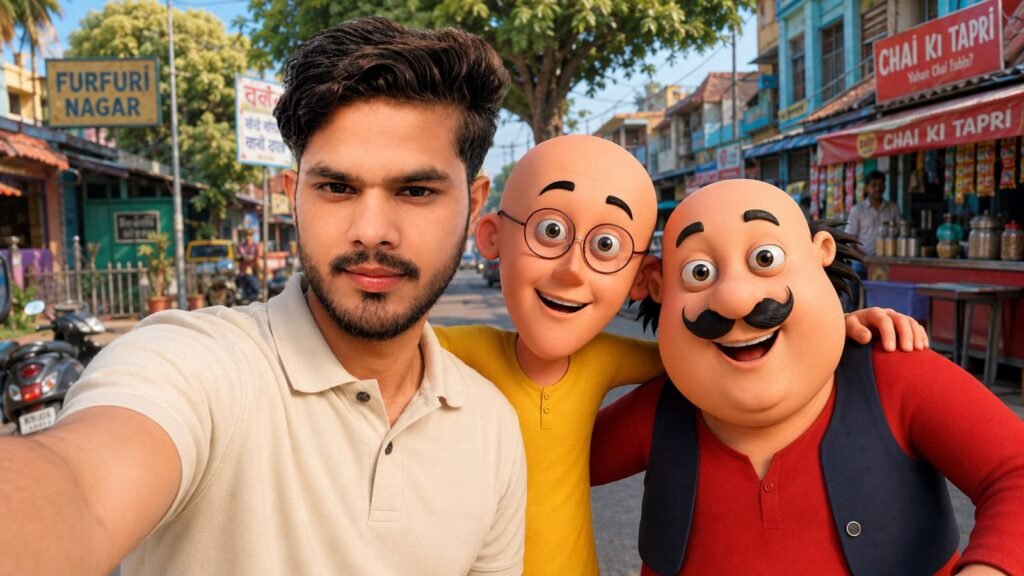
Use the uploaded photo as the face reference. Keep the person's face exactly the same—do not change facial features, hairstyle, skin tone, expression, or identity. Create a realistic 16:9 cinematic vlog-style image where the person is holding the camera with one hand as if recording a vlog (selfie angle). Standing beside the person are Motu and Patlu, smiling and looking directly at the camera. The location is the colorful streets of Furfuri Nagar with Indian-style shops, tea stalls, trees, signboards, scooters, and a lively atmosphere. Blend the real person naturally with the high-quality 3D cartoon characters. Ultra-realistic face match, cinematic lighting, HDR, depth of field, vibrant colors, highly detailed, 8K quality, sharp focus, viral YouTube thumbnail style, clean composition, 16:9 aspect ratio.

Negative Prompt: Face changed, different person, blurry, low quality, extra fingers, extra hands, deformed face, duplicate characters, cropped face, bad anatomy, watermark, text, logo, noise, oversaturated, wrong hairstyle, identity change, cartoon face on human, low resolution.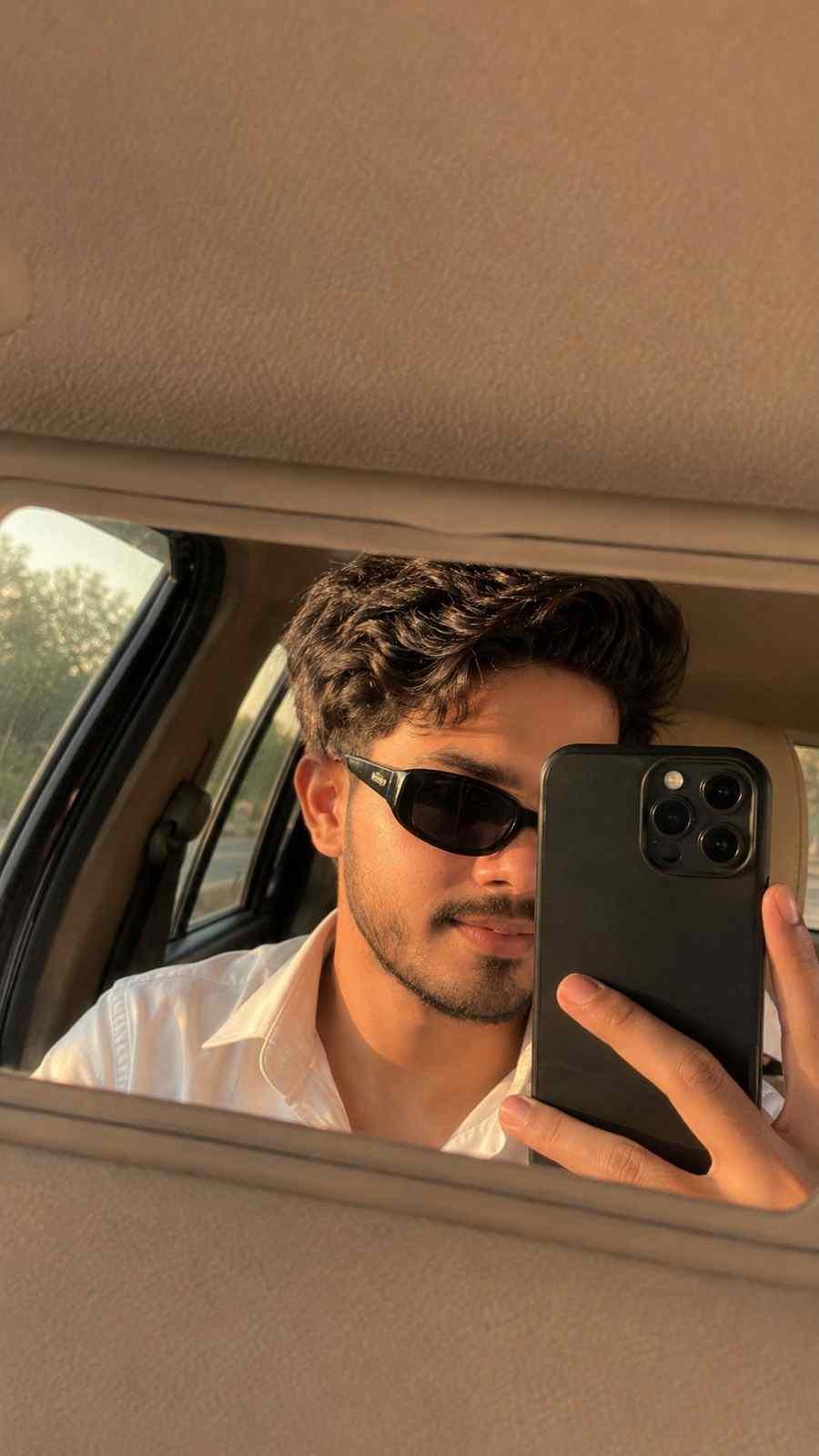
Use the uploaded image strictly as the identity reference. Preserve the exact same face structure, facial proportions, smile style, skin tone, hairstyle, hair texture, hair length, eyebrows, jawline, lips, and overall identity with maximum consistency. Do not beautify or alter facial features. The final result should look like the exact same person naturally photographed on a real iPhone camera.Create an ultra-realistic vanity mirror selfie inside a car during golden hour. The image should feel like a casual candid Instagram photo, not an AI-generated portrait. Composition is extremely important: the selfie is captured through the car’s sun-visor vanity mirror, with the mirror occupying only the middle portion of the frame while the soft beige car interior fills the top and bottom areas naturally. The framing should feel slightly accidental and imperfect, like a quick spontaneous snapshot.The boy is wearing sleek black rectangular sunglasses partially covering one eye. He has a subtle natural smile and relaxed expression. A black smartphone covers part of his face naturally while being held very close to the mirror. Small realistic details like natural skin texture, faint facial imperfections, soft reflections on the sunglasses, realistic fingers, and loose hair strands near the forehead should remain visible.Lighting should exactly match warm golden-hour sunlight entering softly from the car window, creating realistic highlights and gentle shadows across the skin, glasses, hair strands, and phone edges. Color grading must be muted, warm, creamy, and softly desaturated with lifted blacks and realistic skin tones. Avoid HDR, cinematic over-processing, over-sharpening, or artificial beauty filters.Camera quality should feel like a genuine modern iPhone selfie with slight softness, realistic reflections, subtle sensor noise, imperfect focus falloff, and authentic smartphone dynamic range. The overall vibe should feel effortlessly aesthetic, cozy, candid, premium, and extremely believable as a real social-media selfie. 9:16 aspect ratio.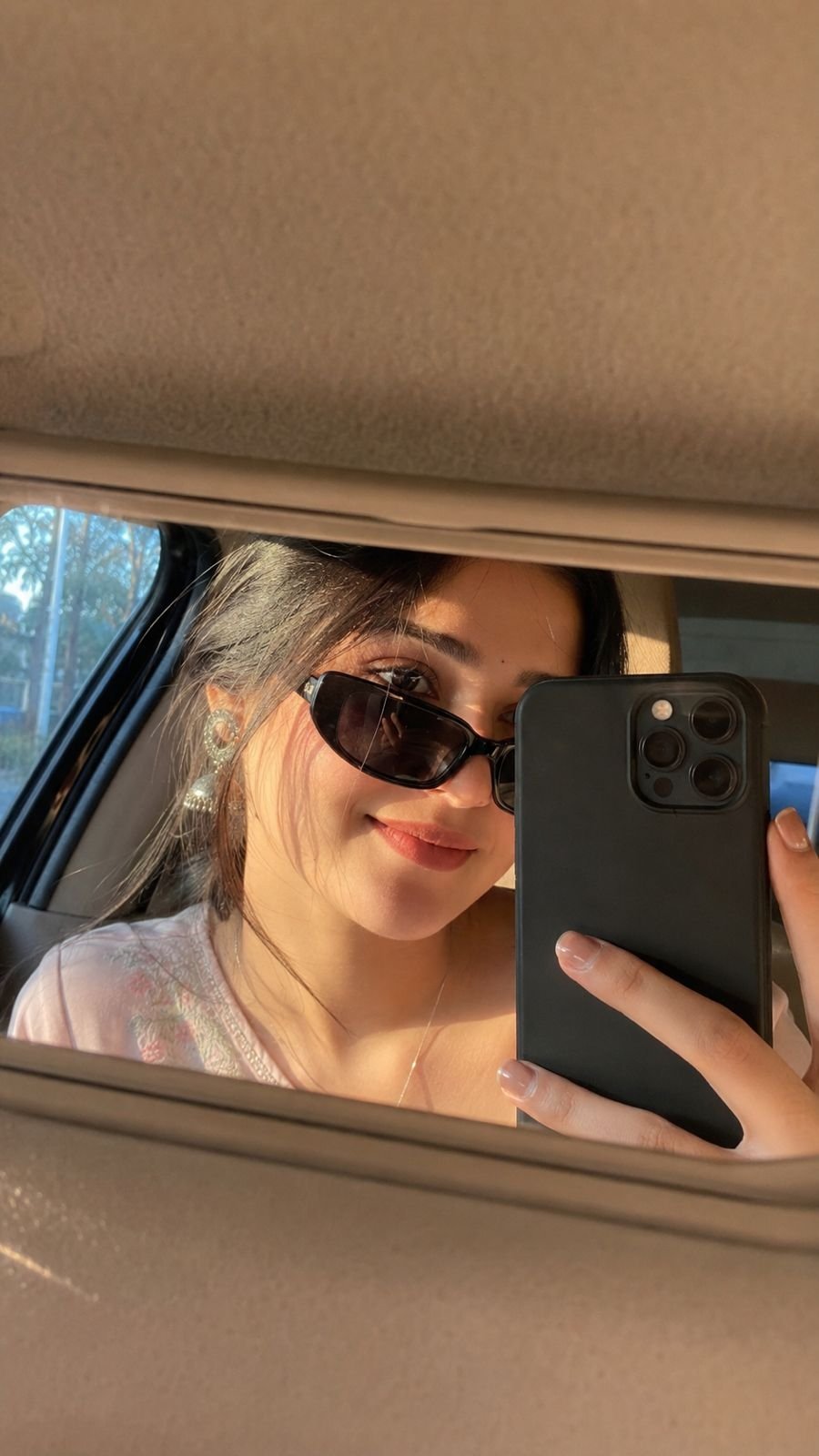
Use the uploaded image strictly as the identity reference. Preserve the exact same face structure, facial proportions, smile style, skin tone, hairstyle, hair texture, hair length, eyebrows, lips, and overall identity with maximum consistency. Do not beautify or alter facial features. The final result should look like the exact same person naturally photographed on a real iPhone camera.Create an ultra-realistic vanity mirror selfie inside a car during golden hour. The image should feel like a casual candid Instagram photo, not an AI-generated portrait. Composition is extremely important: the selfie is captured through the car’s sun-visor vanity mirror, with the mirror occupying only the middle portion of the frame while the soft beige car interior fills the top and bottom areas naturally. The framing should feel slightly accidental and imperfect, like a quick spontaneous snapshot.The girl is wearing sleek black rectangular sunglasses partially covering one eye. She has a subtle natural closed-mouth smile and relaxed expression. A black smartphone covers part of her face naturally while being held very close to the mirror. Small realistic details like glossy nude nails, tiny earrings, soft skin texture, natural pores, and loose strands of hair near the sunglasses should remain visible.Lighting should exactly match warm golden-hour sunlight entering softly from the car window, creating realistic highlights and gentle shadows across the skin, glasses, hair strands, and phone edges. Color grading must be muted, warm, creamy, and softly desaturated with lifted blacks and realistic skin tones. Avoid HDR, cinematic over-processing, over-sharpening, or artificial beauty filters.Camera quality should feel like a genuine modern iPhone selfie with slight softness, realistic reflections, subtle sensor noise, imperfect focus falloff, and authentic smartphone dynamic range. The overall vibe should feel effortlessly aesthetic, cozy, candid, premium, and extremely believable as a real social-media selfie.9:16 aspect ratio.Negative Prompt (What to Avoid)
Negative prompts tell the AI what NOT to include. This helps eliminate unwanted elements and ensures better results. Prompt Copy AI recommends using this negative prompt alongside the main prompt:
Negative Prompt (Copy and Paste)
Avoid: blurry, low resolution, pixelated, distorted facial features, asymmetrical face, cross-eyed, bad skin, acne, wrinkles, aged appearance, makeup-heavy, artificial look, plastic appearance, overly edited, unrealistic proportions, deformed hands, missing fingers, extra fingers, poorly rendered phone, distorted mirror reflection, dark image, poor lighting, washed out colors, oversaturated colors, watermark, text overlay, cheap car interior, economy car, broken mirror, distorted sunglasses, glitchy appearance, AI artifacts, uncanny valley effect, amateur photography style. Copy Negative Prompt
Best AI Tools for Creating Vanity Mirror Selfies
Different AI platforms have different strengths. Prompt Copy AI has tested all major generators specifically for vanity mirror selfie prompts. Here’s how they compare:
| AI Tool | Quality | Speed | Price | Best For |
|---|---|---|---|---|
| ChatGPT with DALL-E 3 | 9/10 | 6/10 | $20/month | Beginners & professionals |
| Google Gemini | 8.5/10 | 9/10 | Free (limited) | Quick experiments |
| Midjourney | 9.5/10 | 7/10 | $10-96/month | Premium results |
| Leonardo AI | 9/10 | 8/10 | Free (limited credits) | Realistic faces |
| Flux | 8.5/10 | 9.5/10 | Free (limited) | Speed & quality balance |
| Google Imagen 3 | 8/10 | 8/10 | Limited beta access | Emerging option |
Prompt Copy AI’s recommendation: Start with ChatGPT or Gemini to test the prompt. Once you understand what works, upgrade to Midjourney or Leonardo AI for premium quality that’s worth posting to your main feed.
Best Camera Settings for Reference
While these are AI-generated images, understanding actual camera settings helps you create more realistic prompts. Here are the optimal settings Prompt Copy AI recommends referencing:
- Camera: Canon EOS R5 or Sony A7R V
- Lens: 85mm f/1.4 prime lens
- Aperture (f-stop): f/2.0-f/2.8 (creates beautiful bokeh)
- ISO: 100-400 (depending on available light)
- Shutter Speed: 1/500s – 1/2000s (golden hour)
- Lighting: Golden hour (6pm-7pm), backlighting
- HDR: Off (shoot in RAW for post-processing)
- Resolution: 8K (7680x4320px or higher)
- Aspect Ratio: 3:4 (vertical for social media)
- Color Profile: Adobe RGB or sRGB with warm white balance (5500-6500K)
When you reference these settings in your vanity mirror selfie AI photo editing prompt, the AI understands exactly what aesthetic you’re going for.
How to Generate Vanity Mirror Selfies Step by Step
Step 1: Choose Your AI Platform
Pick one of the tools mentioned above. If you’re new to this, Prompt Copy AI suggests starting with ChatGPT or Google Gemini since they’re most accessible.
Step 2: Copy the Prompt
Use the complete prompt provided earlier in this article. Prompt Copy AI has spent months refining this prompt specifically for stunning results. Simply copy and paste it into your chosen AI tool.
Step 3: Customize for Your Vision
While the base prompt works great, you can customize it:
- Change hair color or style: “long, wavy brunette hair” or “sleek black straight hair”
- Modify makeup style: “natural makeup” vs “bold makeup with red lipstick”
- Adjust accessories: “gold jewelry” instead of “silver jewelry”
- Change car type: “Mercedes-Benz interior” vs “Tesla Model S interior”
- Modify clothing: “white silk blouse” vs “black leather jacket”
Step 4: Add Your Negative Prompt
Include the negative prompt to ensure the AI avoids common mistakes. This step is crucial for consistency.
Step 5: Generate Your Image
Click generate and wait. Most AI tools take 30 seconds to 3 minutes. Prompt Copy AI recommends generating 4-6 variations so you have options.
Step 6: Review and Select
Look at all generated images. Even with the same prompt, AI creates variations. Choose your favorite or blend the best elements from multiple images using photo editing software.
Step 7: Light Editing (Optional)
Most AI-generated images are production-ready, but you might:
- Adjust brightness and contrast slightly
- Enhance colors subtly in post-processing
- Remove minor artifacts if any exist
- Add subtle sharpening for social media compression
Step 8: Share on Social Media
Upload to Instagram, TikTok, Pinterest, or wherever your audience is. Prompt Copy AI recommends using hashtags like #VanityMirrorSelfie #GoldenHourPhoto #AIGenerated for maximum reach.
Pro Tips for Better Results from Prompt Copy AI
Prompt Copy AI has tested thousands of variations and discovered these tricks that consistently improve results:
Tip 1: Be Specific About Skin Tone
Instead of just “woman,” specify “woman with warm medium brown skin tone” or “fair complexion.” This dramatically improves accuracy and inclusivity in results.
Tip 2: Mention the Mirror Angle
Add details like “the mirror is tilted slightly toward the camera” or “shot through the visor mirror at a 45-degree angle.” This improves composition and realism.
Tip 3: Reference Photography Styles
Include phrases like “shot by Annie Leibovitz,” “Vogue magazine style,” or “lifestyle photography aesthetic.” Prompt Copy AI finds this significantly elevates the final result’s quality.
Tip 4: Describe the Mood
Add emotional context: “confident and carefree,” “luxurious and aspirational,” “candid and natural.” This influences the AI’s interpretation of expression and overall feeling.
Tip 5: Specify Lighting Direction
Instead of just “golden hour,” say “warm golden light streaming from the left side, creating soft shadows on the right cheek.” This precision matters.
Tip 6: Include Texture Details
Mention “smooth, glowing skin,” “shiny hair,” “reflective sunglasses,” “leather car seats.” Texture details make images more dimensional and realistic.
Tip 7: Test Multiple Variations
Prompt Copy AI never relies on one generation. Generate with the main prompt, then try subtle variations: different hair color, different sunglasses style, different clothing. Compare results and save your favorites.
Tip 8: Use Comparison References
Reference celebrities or influencers: “makeup style like Zendaya,” “hairstyle like Hailey Bieber,” “aesthetic like a luxury lifestyle Instagram account.” This helps the AI understand your vision.
Why Use Prompt Copy AI for Your Vanity Mirror Selfies?
You might wonder why Prompt Copy AI is worth considering when you could write your own prompts. Here are the genuine advantages:
Tested Prompts
Prompt Copy AI has tested each prompt hundreds of times across different AI platforms. The prompts are optimized for consistent, stunning results. You’re not experimenting—you’re using proven formulas.
Time Savings
Writing an effective vanity mirror selfie AI photo editing prompt requires understanding AI language, testing, and refinement. Prompt Copy AI eliminates hours of trial and error. Copy, paste, generate.
Customization Options
Prompt Copy AI provides prompts with clear customization points. You know exactly which words to change for your specific vision without disrupting the prompt’s overall effectiveness.
Regular Updates
As AI platforms evolve, Prompt Copy AI updates their prompts to work with new model versions. You always have current, effective prompts.
Community Insights
Prompt Copy AI aggregates what works across thousands of users. You benefit from collective learning rather than starting from scratch.
Multi-Platform Optimization
The same prompt doesn’t work identically on ChatGPT, Gemini, Midjourney, and Leonardo AI. Prompt Copy AI provides platform-specific versions, ensuring great results regardless of which tool you choose.
Learning Resource
By studying how Prompt Copy AI structures prompts, you learn to write better prompts yourself. It’s both a tool and an educational resource.
Frequently Asked Questions About Vanity Mirror Selfie AI Prompts
Can I use these AI-generated images commercially?
It depends on the AI platform’s terms. Most platforms allow personal use with free accounts but restrict commercial use. Prompt Copy AI recommends checking your specific platform’s license terms before using generated images for business purposes. Paid tiers usually allow commercial use.
How long does it take to generate a vanity mirror selfie?
Generation time varies by platform. Google Gemini and Flux generate in 30-60 seconds. ChatGPT with DALL-E 3 takes 1-2 minutes. Midjourney typically takes 1-5 minutes depending on queue time. Prompt Copy AI finds that patience usually pays off with better results.
Do I need to disclose that my image is AI-generated?
Many platforms and jurisdictions increasingly require disclosure of AI-generated content. Prompt Copy AI recommends being transparent and adding a caption like “AI-generated” or “#AIGenerated.” This actually builds trust with your audience.
What if the AI doesn’t create what I want?
Regenerate with the same prompt, or modify specific words. Prompt Copy AI suggests changing one element at a time so you understand what affects results. Sometimes a single word swap dramatically improves the output.
Can I edit the generated image afterward?
Absolutely. Prompt Copy AI recommends light editing in Photoshop, Lightroom, or Canva. Adjust brightness, contrast, saturation, or crop composition. Most AI images are polished enough that minimal editing is needed.
Which AI platform does Prompt Copy AI recommend most?
Prompt Copy AI recommends ChatGPT for beginners (easiest), Midjourney for premium quality, and Leonardo AI for the best balance of quality and speed. Your choice depends on budget and desired quality level.
How often should I generate new images?
Prompt Copy AI suggests generating new content weekly to stay relevant on social media. Different variations of the same prompt create content variety while maintaining consistent aesthetic.
Can I use the same prompt multiple times?
Yes! Prompt Copy AI explicitly encourages reusing prompts. Each generation creates a unique variation even with identical prompts. This is how you build a cohesive aesthetic across your content.
Are there legal issues with sharing AI-generated vanity mirror selfies?
No, as long as you own the rights to the generated image (which you do when using platforms properly) and disclose it’s AI-generated. Prompt Copy AI emphasizes transparency prevents legal issues.
How do I know if a vanity mirror selfie is AI-generated?
Look for subtle signs: too-perfect skin, unusual reflections, inconsistent shadows, or impossible details. However, AI is improving rapidly. Prompt Copy AI notes that the best AI-generated images are nearly indistinguishable from real photos, which is why disclosure matters.
Conclusion
The vanity mirror selfie AI photo editing prompt trend represents a shift in how we create and share content. You no longer need expensive equipment, perfect lighting conditions, or professional photography skills to create images that rival magazine covers.
With the complete prompt provided in this article and the tools discussed, you’re ready to generate stunning vanity mirror selfies that will impress your social media followers. Whether you’re trying to grow your personal brand, test content ideas, or simply have fun with AI technology, this trend offers incredible possibilities.
Remember: the key to success is specificity. Detailed prompts create better images. Take time to customize the vanity mirror selfie AI photo editing prompt to match your unique vision, and don’t be afraid to experiment with variations.
Prompt Copy AI is constantly adding new prompts, platform guides, and generation tips to help creators like you master this trend. Whether you’re using ChatGPT, Gemini, Midjourney, Leonardo AI, or any other platform, the prompts and strategies in this article will help you create images that get noticed.
The future of content creation is here, and it’s more accessible than ever. Start with the prompt above, choose your AI platform, and generate your first stunning vanity mirror selfie right now. Your followers are waiting for this content, and you have everything you need to create it. Join the thousands of creators leveraging Prompt Copy AI‘s resources to create professional-quality content that stands out in crowded social media feeds.
ChatGPT → https://chatgpt.com
Google Gemini → https://gemini.google.com
Leonardo AI → https://leonardo.ai
Midjourney → https://www.midjourney.com